Add your promotional text...
From Intention to Action: A Gentle, Real-Life Approach to Goal Setting
LIVING &LIFE
12/13/20251 min read
New Version of Me, 2026
These days, I’m drawn to things that feel quieter.
Neutral colors. Clean silhouettes. Mornings without rush.
A life that feels edited, not crowded.
As 2026 approaches, I’m not chasing a dramatic reset.
I’m refining. Softening the edges. Choosing intention over noise.
The new version of me moves a little slower, but with more certainty.
Daily movement is no longer about discipline—it’s part of my routine, like getting dressed.
A walk in the morning light. Stretching between tasks.
Eating in a way that feels clean and grounding, favoring simple, nourishing choices that support my body instead of fighting it.
My relationship with money is changing too.
Less impulse, more awareness.
Monthly budgeting, consistent investing, and thoughtful spending—very much like building a wardrobe I plan to wear for years, not just a season.
Quality over quantity. Long-term over instant.
Career-wise, I’m focusing on alignment.
Projects that feel like an extension of my taste and values.
Creating steadily, refining my voice, and allowing growth to unfold naturally.
Not everything needs to be announced. Some things are better built quietly.
Relationships feel more central than ever.
Long lunches with family. Road trips with friends.
Moments that don’t need documenting.
Presence is becoming my favorite luxury.
I’m also making room for joy that doesn’t need a purpose.
Movies on slow nights. Art classes simply because they inspire me.
Reading without turning it into a goal.
Letting creativity exist without expectation.
My spiritual practice has softened into a rhythm—
morning journaling, small gratitude notes, affirmations that feel believable rather than aspirational.
A few quiet minutes before the day begins, setting the tone.
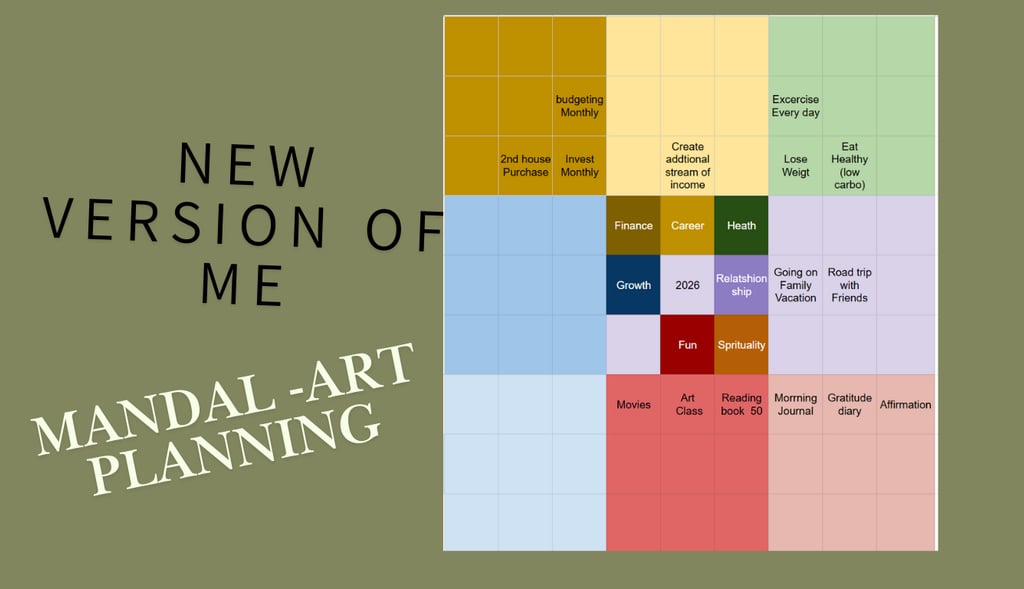
When I laid all of this out in a mandala planner, I realized that 2026 isn’t about becoming someone new.
It’s about becoming more intentional in how I live, dress, spend, and rest.
The new version of me doesn’t chase trends—
she curates her life the same way she curates her wardrobe.
Thoughtfully. Calmly. With care.
And that, to me, feels like the most timeless choice.